How binaural beats “trick” your brain into deep relaxation, reduced anxiety, and better sleep.
͏ ͏ ͏ ͏ ͏ ͏ ͏ ͏ ͏ ͏ ͏ ͏ ͏ ͏ ͏ ͏ ͏ ͏ ͏ ͏ ͏ ͏ ͏ ͏ ͏ ͏ ͏ ͏ ͏ ͏ ͏ ͏ ͏ ͏ ͏ ͏ ͏
| |
|
|
| Binaural beats and isochronic tones — audio tracks designed to shift your brainwave patterns — are all over Spotify and YouTube. They promise better sleep, sharper thinking, and less anxiety, but the research is messy. Most studies are small, sometimes their results conflict, and the effects on older adults have barely been investigated. |
| Let’s find the signal in the noise. |
|
|
|
|
|
|
Listen up,
Tim Snaith
Newsletter Editor, Healthline |
 |
|
Written by Tim Snaith
April 8, 2026 • 3 min read |
|
| |
|
|
|
|
| |
 |
|
|
| When your brain fills in the gap |
| I keep seeing YouTube recommendations with titles like “Locked-in Deep Work,” “Boost Serotonin Happy Mindfulness 10 Hz Isochronic,” and “Relief for a Distracted Mind Study Music.” They’re very popular with hundreds of thousands of views. But do they work? |
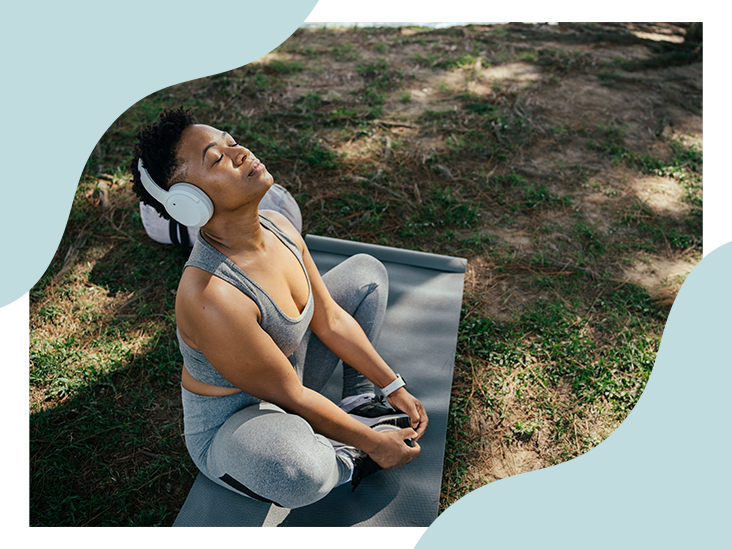
| The proposed mechanism is interesting. When you hear a 132 Hertz (Hz) tone in one ear and a 121 Hz tone in the other (aka binaural beats), your brain perceives a third tone at 11 Hz — a slow pulse that doesn’t exist outside your head. The theory is that this phantom frequency nudges your brainwaves toward states that encourage deep sleep, relaxation, or calm focus. |
| A related technique called isochronic tones pulses a single tone on and off at a set rhythm, and no headphones are required. I’ve been listening to a 10 Hz alpha isochronic track while working, and it does seem to help. Both techniques aim at the same effect: brainwave entrainment. |
| However, the most recent research shows the evidence is mixed. |
| A 2023 review found just 14 qualifying studies. Five supported the idea that binaural beats shift brainwave patterns. Eight contradicted it. Wildly inconsistent study designs made a meaningful comparison nearly impossible. The largest trial to date, with 1,000 participants, found that listening to binaural beats at home actually worsened cognitive test scores. |
| A 2025 study used EEG (electroencephalogram) monitoring to confirm that binaural beats do indeed entrain brain activity at targeted frequencies, validating the mechanism even if the benefits remain unclear. For example, a 2025 pilot found alpha-frequency beats reduced stress scores, but didn’t improve anxiety or working memory. |
| There is less data available for older age groups, but what does exist is interesting. A 2025 review identified 12 studies on binaural beats in older adults. One of the few randomized controlled trials (RCTs), published in 2024, tested binaural beat music on older adults (average age 81 to 82) with poor sleep in a Taiwanese care facility. After 14 days of daily listening, the treatment group showed improved sleep quality, lower depression scores, and calmer nervous system activity. Sounds promising, but this was only a single small trial. |
| A neurologist quoted in an older Healthline report said binaural beats are probably no more effective than calming music. He also said that listening to them is harmless. |
| If you want to try binaural beats yourself, wear headphones and listen for 15 to 30 minutes in a quiet room. Choose a delta or theta mix for sleep, alpha for relaxation. And let us know if it worked for you. |
| For isochronic tones, speakers work fine. Here’s the 3-hour mix I’ve been listening to. None of this should replace anything your doctor recommends — consider it a fun experiment. |
|
|
| 💪 Over to you: Have you heard of binaural beats and, if you have, did they have any noticeable effect when you listened? Email wellnesswire@healthline.com and let us know. |
| |
|
|
| |
 |
|
|
| Doctor Karaoke Performs Medically Accurate Love Songs! |
| Have you ever wondered if songs about the heart are medically accurate? In this first episode of Doctor Karaoke, Cardiologist Dr. Jeffrey Le re-writes popular love songs to “be more cardiac.” Which is your favorite? |
|
|
| |
|
|
|
|
  |
| |
| |
| |
| Until next time, |
 |
Take care of yourself, and we’ll see
you again soon! |
| |
 |
| |
 |
| This edition was powered by |
| phantom soundwaves. |
| |
|
|
|
|
|
View in browser
Did a friend send you this email? Subscribe here.
To see all newsletters, click here.
Privacy | Unsubscribe
We may feature your messages to our inbox within our content. Please do not provide any personal identifiable information. Replies may be edited for length and clarity. For more, see our Privacy Policy.
Our website services, content, and products are for informational purposes only. Healthline does not provide medical advice, diagnosis, or treatment and should not be used as a substitute for medical advice from a healthcare professional. Healthline encourages you to make any treatment decisions with your healthcare professional.
Every product we recommend has gone through either Healthline’s or Optum Now’s vetting processes. If you buy through links on this page, we may receive a small commission or other tangible benefit. Healthline has sole editorial control over this newsletter. Potential uses for the products listed here are not health claims made by the manufacturers. Healthline and Optum Now are owned by RVO Health.
© 2026 RVO Health
1101 Red Ventures Drive
Fort Mill, SC 29707 |
| |
|
|
  |
|
|
|
|


No comments:
Post a Comment